
Blog
Does SoftWave Therapy Hurt? What a Session Really Feels Like
Does SoftWave Therapy Hurt? What a Session Really Feels Like in the Lehigh Valley
If you have been researching SoftWave TRT for stubborn pain, one question probably comes up before any other: is it going to hurt? It is a fair thing to wonder. Anyone dealing with a nagging shoulder, a cranky low back, or a foot that flares up with every step already has enough discomfort to manage, and the idea of adding more can make you put off care entirely. Here in the Lehigh Valley, that hesitation keeps a lot of people from trying something that could genuinely help them feel better.
At First Choice Chiropractic, Neurology, & Rehabilitation Center in Emmaus, PA, Dr. Kurt R. Schichtl, DC hears this question nearly every week, and the honest answer is reassuring. SoftWave TRT is a non-invasive approach that uses broad-focused acoustic waves to encourage your body's own healing response, and understanding how a session actually feels tends to melt away most of the anxiety people carry into the office.
The Short Answer: Most People Find It Very Tolerable
Let us start with the bottom line. Most patients describe SoftWave therapy as comfortable and easy to sit through. There are no needles, no injections, no numbing agents, and no medications at any point. Nothing pierces the skin. You stay fully clothed in most cases, or expose only the area being treated, and you remain relaxed and seated or lying down the entire time.
That said, honesty matters more than a sales pitch. SoftWave is not completely sensation-free. You will feel it working. The experience is simply very different from the sharp, dreaded pain many people brace themselves for. Once you know what the sensation is, it stops feeling like something to fear and starts feeling like a sign that the treatment is reaching the tissue it needs to reach.
What the Sensation Actually Feels Like
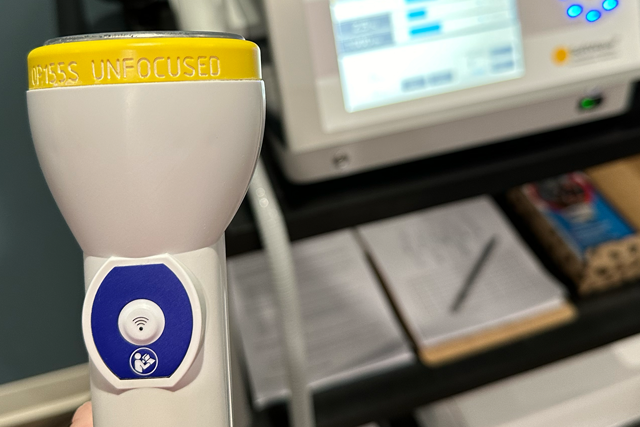
SoftWave TRT is delivered through a handheld applicator that the provider moves slowly over the treatment area, sending acoustic waves down into the deeper tissue. Most people describe the feeling as a rhythmic tapping or pulsing, almost like a gentle, rapid knocking against the skin that carries a bit deeper than a normal touch.
The sensation moves as the applicator moves. Over healthy, relaxed tissue, that tapping is usually mild and easy to ignore after the first few seconds. You may notice a slight buzzing or a warm, activated feeling that many patients find oddly satisfying, because the exact spot that has been bothering them is finally getting attention.
Because the waves are broad-focused rather than concentrated to a single pinpoint, the energy spreads across a wider zone of tissue instead of drilling into one narrow point. For most people, that translates to a sensation that is firm and noticeable but not sharp or stabbing.
Why Tender Areas Feel More Intense
Here is the part that surprises people in the best way. The spots that feel the most intense during a SoftWave session are almost always the areas that are already injured, inflamed, or irritated. When the applicator passes over a healthy region, you barely notice it. When it passes over the true source of your pain, the tapping can feel noticeably stronger or more sensitive.
Rather than being a downside, this is genuinely useful. It helps Dr. Schichtl locate and confirm where the underlying problem actually lives, which is not always exactly where you think the pain is coming from. The intensity in those areas is temporary, it fades as the applicator moves along, and it tends to diminish over a treatment series as the tissue responds and calms down.
How Long Does a Session Last?
One of the most reassuring facts about SoftWave is how quick each visit is. A typical session runs only about 10 to 15 minutes of treatment time. That is not a long window to sit through a manageable tapping sensation, and it is one reason so many people fit care into a lunch break or a busy weekday in the Lehigh Valley.
Most treatment plans involve a series of sessions spread over roughly 6 to 8 weeks, and your body keeps responding long after your appointments end. The healing cascade SoftWave is designed to trigger can continue working in the tissue for weeks to months after the final session, so the short time you spend in the chair does work that extends well beyond the visit itself.
You Stay in Control of the Intensity
Comfort is not something you simply have to endure. The intensity of the treatment can be adjusted, and your feedback guides that. If a certain area feels like too much, tell your provider. Dr. Schichtl can dial the settings up or down so the session stays within a range that works for you.
This matters, because tolerance varies from person to person and from one body region to another. What feels like a gentle tap on your thigh might feel more pronounced over a bony ankle or an inflamed shoulder. The goal is never to push you past what you can comfortably handle. It is to deliver enough energy to stimulate a healing response while keeping the experience something you are willing to repeat.
How SoftWave Helps Without Needles, Drugs, or Downtime
SoftWave TRT sends broad-focused acoustic waves deep into tissue, where they are designed to wake up your body's own repair processes. Instead of masking pain, the therapy aims to address the underlying environment so the area can recover. In plain language, here is what those waves are designed to encourage:
- Resident stem cell activation: stimulating and mobilizing the body's own repair cells within the treated tissue.
- New blood vessel formation: supporting angiogenesis, which helps improve circulation to the area.
- Cell proliferation and collagen support: encouraging the building blocks involved in tissue repair.
- Inflammation modulation: helping the body manage the inflammatory response tied to lingering pain.
- Cleanup of aged cells: supporting clearance of worn-out cells so healthier tissue can take over.
Because none of this requires cutting, injecting, or medicating, there is no downtime after a session. You can walk out, drive yourself home, run errands, or head back to work right away. That freedom is a big reason people appreciate the approach.
If you are in the Lehigh Valley and the fear of pain has been the only thing holding you back from trying something new, request a SoftWave consultation at First Choice Chiropractic and get your specific questions answered directly.
Setting Honest Expectations
SoftWave therapy is designed to support your body's natural healing, and many patients report meaningful relief over the course of their care. It is not a guaranteed cure, and it does not replace medical advice from your physician. Results vary depending on the condition, its severity, and how long it has been present. The best way to know whether SoftWave is a good fit is a consultation, where Dr. Schichtl can evaluate your history, examine the area, and determine whether you are a candidate.
The takeaway on the comfort question is simple and honest. SoftWave is not painless, but for most people it is very tolerable, brief, and free of the needles and downtime that make other options feel daunting. You will feel a tapping pulse, tender spots may speak up a little louder, and your provider can adjust things to keep you comfortable the whole way through.
Ready to Take the Next Step?
If worry about discomfort has kept you on the sidelines, let us walk you through what to expect and answer every question before you begin. A short conversation can replace a lot of unnecessary anxiety.
Request your SoftWave Therapy new patient visit online today
Contact First Choice Chiropractic
First Choice Chiropractic, Neurology, & Rehabilitation Center
1301 Chestnut St
Emmaus, PA 18049
Phone: 610-967-4996
Our Main Office Website: https://fcemmauschiro.com/
‹ Back
Recent Posts
-
-

SoftWave Therapy for Tennis Elbow and Golfer's Elbow
June 2, 2026
-
SoftWave Therapy for Physically Demanding Jobs
May 12, 2026
-

SoftWave Therapy for Pickleball Players: Stay in the Game
April 21, 2026
-